
AI wearables: Innovation in search of a problem?
Why the flood of AI pins, pendants, and glasses hasn't found its breakthrough moment yet.


TL;DR
The AI wearables market is experiencing a gold rush moment with pins, pendants, glasses, and even shoes flooding the market. But beneath the hype lies a fundamental question: are these products solving real problems, or are they innovations in search of users? We’re clearly in Utterback’s “Fluid phase” with wild experimentation and no dominant design yet. But there’s a path forward: the winners will be those that solve specific problems well, respect privacy boundaries, and fit naturally into daily life rather than trying to do everything.
Testing the hype
The tech industry is excited about a new category: AI-backed wearable hardware devices promising to revolutionize how we interact with technology. Pins that record everything you say, glasses that translate in real-time, pendants that summarize your meetings. The promises are bold, the designs are varied, and the marketing is everywhere.
At Futurewave, we like to crash test new products. When the Rabbit R1 emerged as one of the pioneers in this space, generating significant buzz and positioned as a breakthrough AI companion device, we thought it deserved a proper evaluation. The verdict? It looks nice, it’s fun to test, but eventually it feels more like a novelty than a necessity.
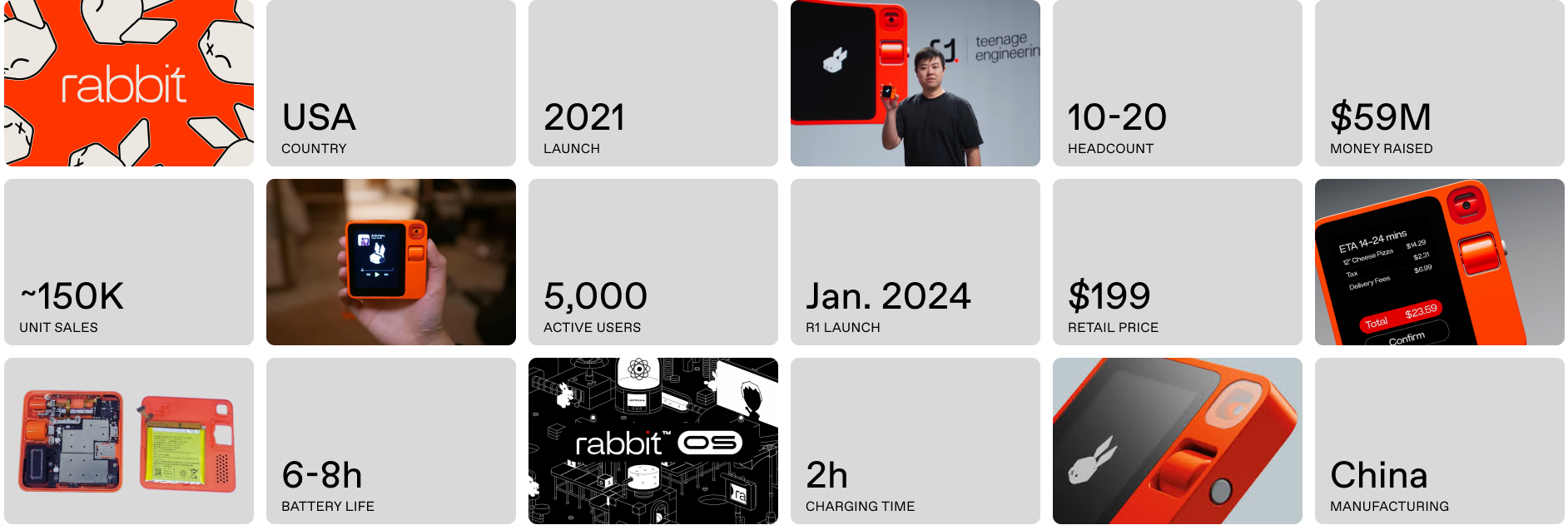
But this test opened a much broader discussion. The Rabbit R1 isn’t an outlier, it’s representative of an entire wave of AI wearables entering the market, each claiming to be the device that will finally free us from our smartphones, boost our productivity, or augment our capabilities in meaningful ways.
So far, most of these devices struggle to demonstrate clear advantages over existing solutions and that’s the real problem this market needs to solve.
Who’s Building What?
Every company is betting on a different vision of what AI hardware should be. Just look at the explosion of different designs: pins, pendants, glasses, rings, handheld devices, even shoes. This thanks to miniaturization of size (hardware, sensors, chips), increase in computing power and democratization of AI models. It opened opportunities to integrate high tech in tiny objects, plus more freedom in design and aesthetics beyond functionality.
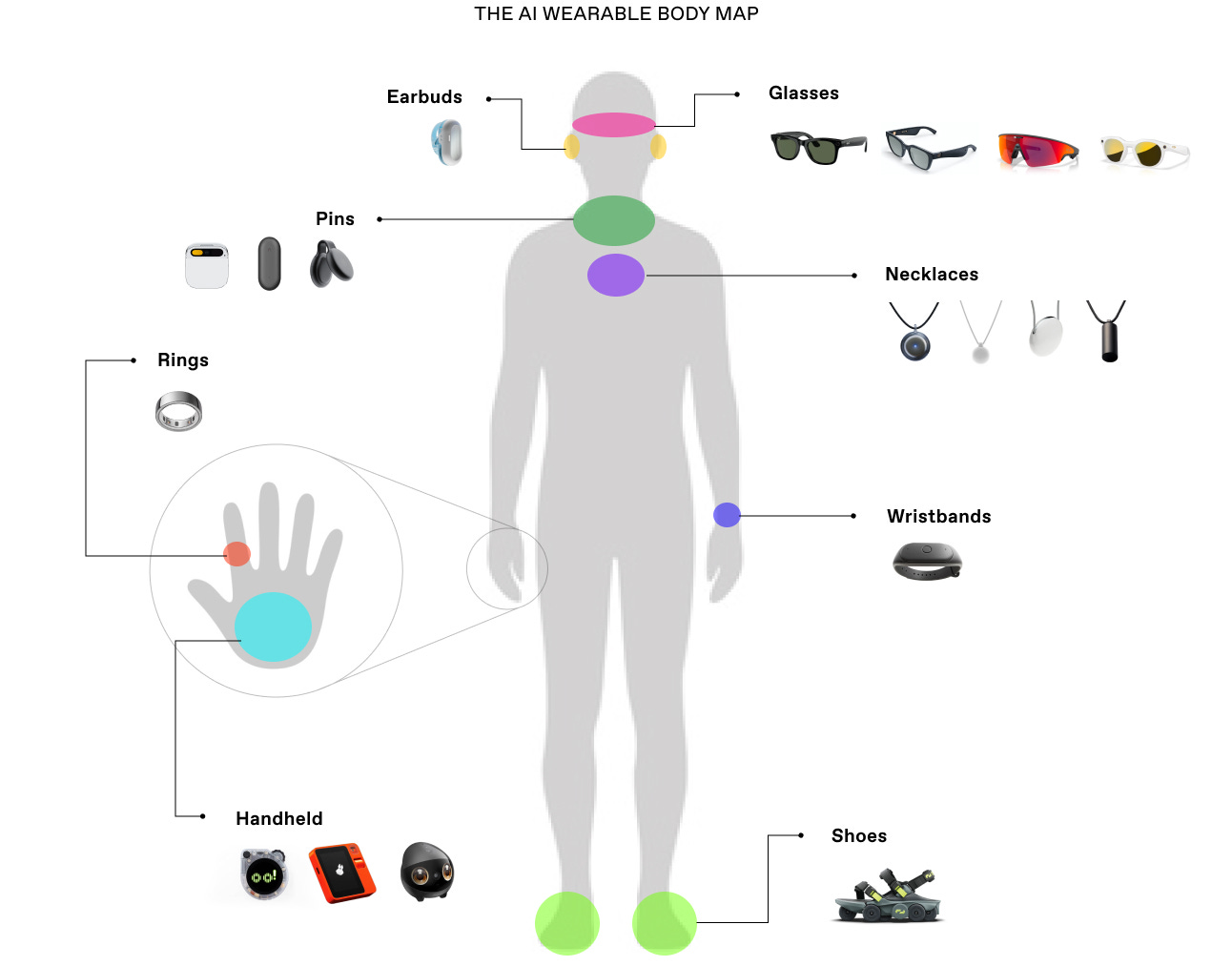
We’ve mapped out players in a matrix to compare them based on their use case (specific vs. generic) and philosophy (tech vs. lifestyle) :
“Quiet optimizers”: they solve ONE specific problem well (health, fitness, workplace), have a clear value proposition, are discrete and require minimal behavior change.
“Tech pioneers”: they lead with technology and attempt to be everything for everyone. This area seems to fail by building a solution and then searching for problems it can solve.
“Specialist tools”: they lead with technology and solve a specific problem, however they need to demonstrate real value for people to accept them.
“Fashion generalists”: they hide features inside something people already desire for non-tech reasons, softening the barrier to adoption but questioning end-user benefit.
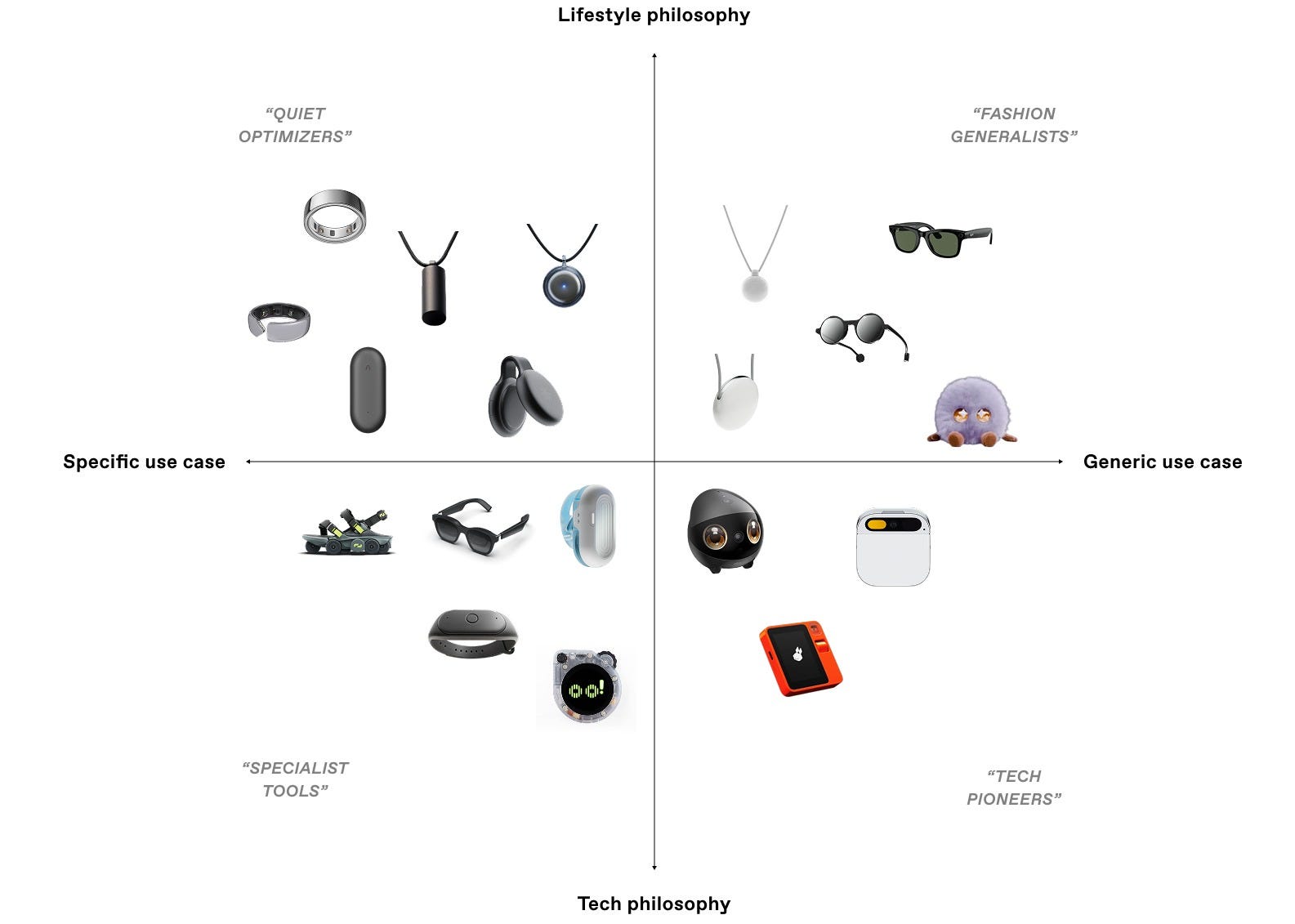
AI wearables are currently distributed across a spectrum from lifestyle-focused generalist devices to tech-forward specialist tools, with most products struggling to balance broad appeal against solving specific user problems effectively.
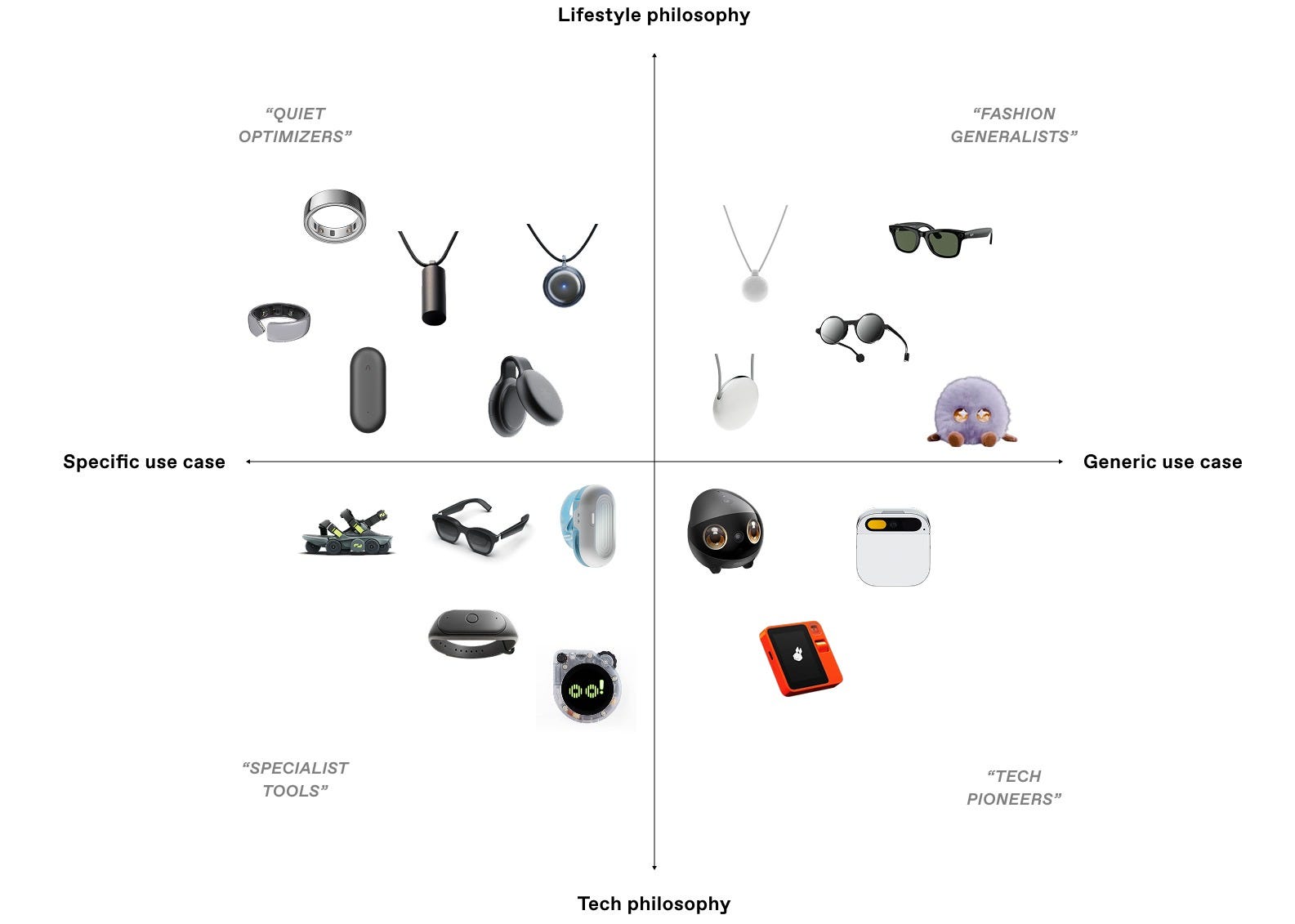
This fragmentation reveals the core challenge: without a clear understanding of what users actually need, companies are trying different approaches across various form factors and use cases. Academic research validates these concerns, approximately 30% of wearable device owners abandon their devices within six months, with abandonment rates climbing as high as 50% within just two weeks for some devices1. The reason? Most AI wearable companies are betting on the market rather than understanding users to their core. It’s not a technical problem, it’s a behavioral one.
What’s going to emerge?
Referring to Utterback’s innovation model2, it’s clear: we are in the “Fluid phase” of AI wearables, meaning the market is characterized by:
Radical product innovation: Companies experimenting with wildly different approaches
No dominant design: No clear standard has emerged
High failure rate: Multiple examples of failures or mixed success
Market confusion: Consumers don’t know what to buy or why they need it
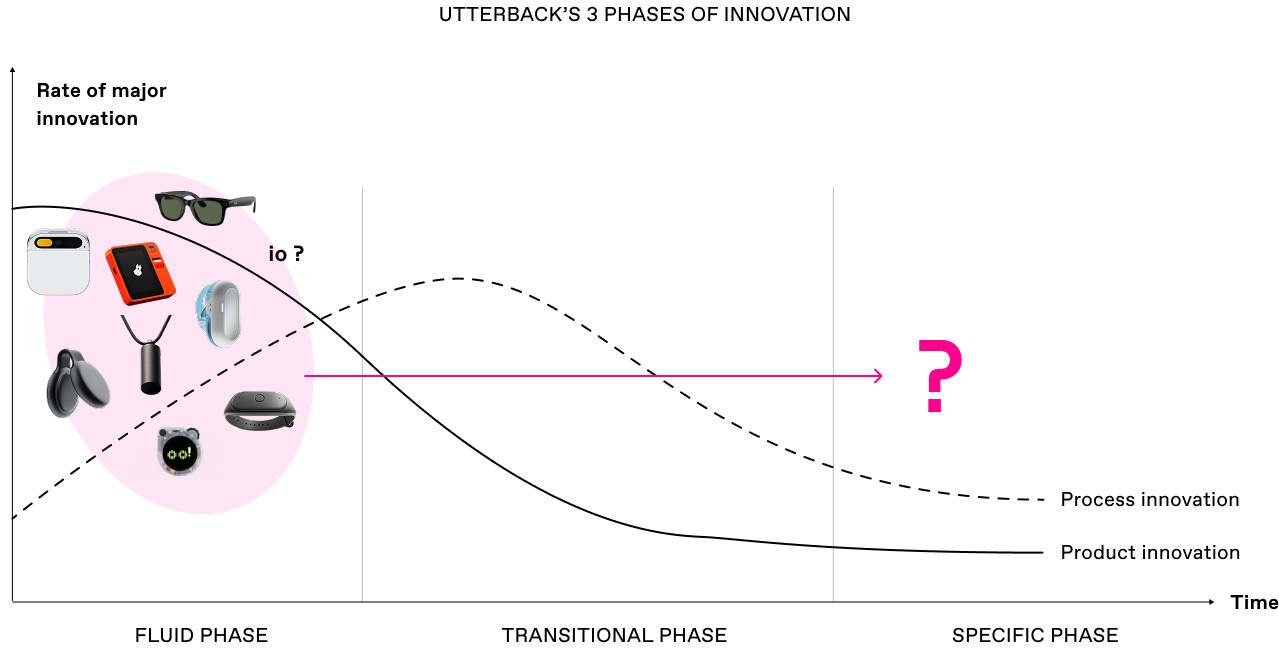
So what’s next? Is this market going to evolve past the fluid phase into an established product category or is it a temporary trend?
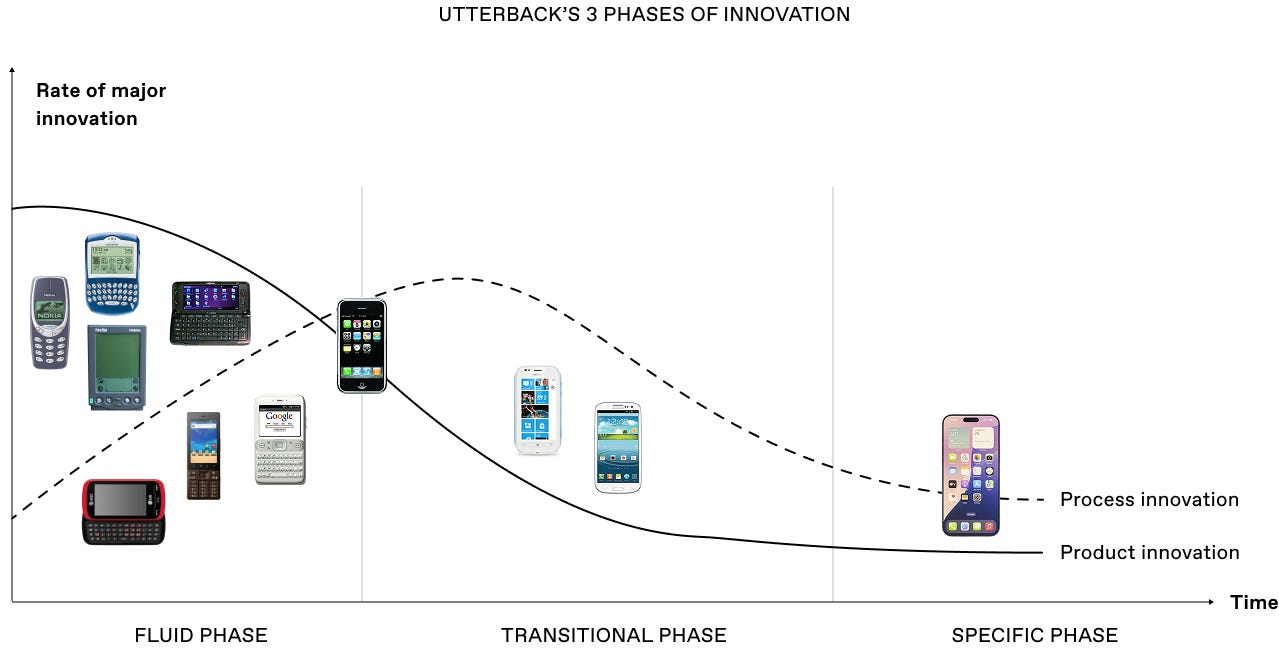
Taking example from smartphones, manufacturers initially introduced a variety of designs (flip phones, candy bar styles, sliders, etc.), operating systems (Symbian, Windows Mobile, Palm OS), input methods (physical keyboards, stylus, touchscreens), and hardware innovations.
Then the iPhone emerged, with its touchscreen, minimalist hardware, and App Store, as the solution that best matched user needs and became the blueprint that most competitors followed, setting the dominant design and the entry in the transitional phase.
Conclusion
AI wearables will likely reach the “Transitional phase” through the following:
Core user needs satisfaction: be good at one specific thing, so users understand the benefit, instead of being poorly-defined “do-everything” product. Form factor and lifestyle integration matter more than raw AI capabilities.
Elegantly blend in daily life: the more you go for discrete high technology and sensor miniaturization, the easier user accept to wear it and the better the comfort and data fidelity.
Avoid latency and ensure privacy by moving compute from cloud to local nodes (eg. mobile phones, private trustworthy servers), or by moving compute from cloud to edge (long shot for wearables). Always-on recording and ambient listening face major social acceptance barriers. Regulatory frameworks (GDPR, FDA, AI Act) and user expectations demand privacy-by-design approaches.
Think in terms of ecosystem: envision the wearable as a node in a network, working together with others for a better user experience, not as a stand-alone.
The successful products won’t be the most technologically impressive, they’ll be the ones that understand human behavior, respect privacy boundaries, and fit naturally into existing routines.
Otherwise… these ideas won’t go further and we’ll find better use of artificial intelligence in products than dedicated companions.
As we watch this market evolve, let us know what you think. What AI tool is actually missing? What would make you wear technology on your body every day?
Author: Jehan Coppé
Attig, C., & Franke, T. (2019). Abandonment of personal quantification: A review and empirical study investigating reasons for wearable activity tracking attrition. Computers in Human Behavior, 102, 223-237. https://www.sciencedirect.com/science/article/abs/pii/S0747563219303127
Cadmus-Bertram, L. A., et al. (2015). Randomized trial of a Fitbit-based physical activity intervention for women. American Journal of Preventive Medicine, 49(3), 414-418.
 | A guest post by
|