
Building a smart product is easy. Making it manufacturable is something else.

At Futurewave, we work with teams that often have everything they need to succeed. The technology is proven. The ambition is real. What's missing is the path between the product intent and what an OEM can actually manufacture. That path isn't an engineering problem.
It's a translation problem.
And it's a problem we find at every stage, with startups, scale-ups, and sometimes, more surprisingly, with large groups. Only the scale changes.
This gap wasn't created by new technologies. It has always existed. What they did is make it more visible, and more costly to ignore.
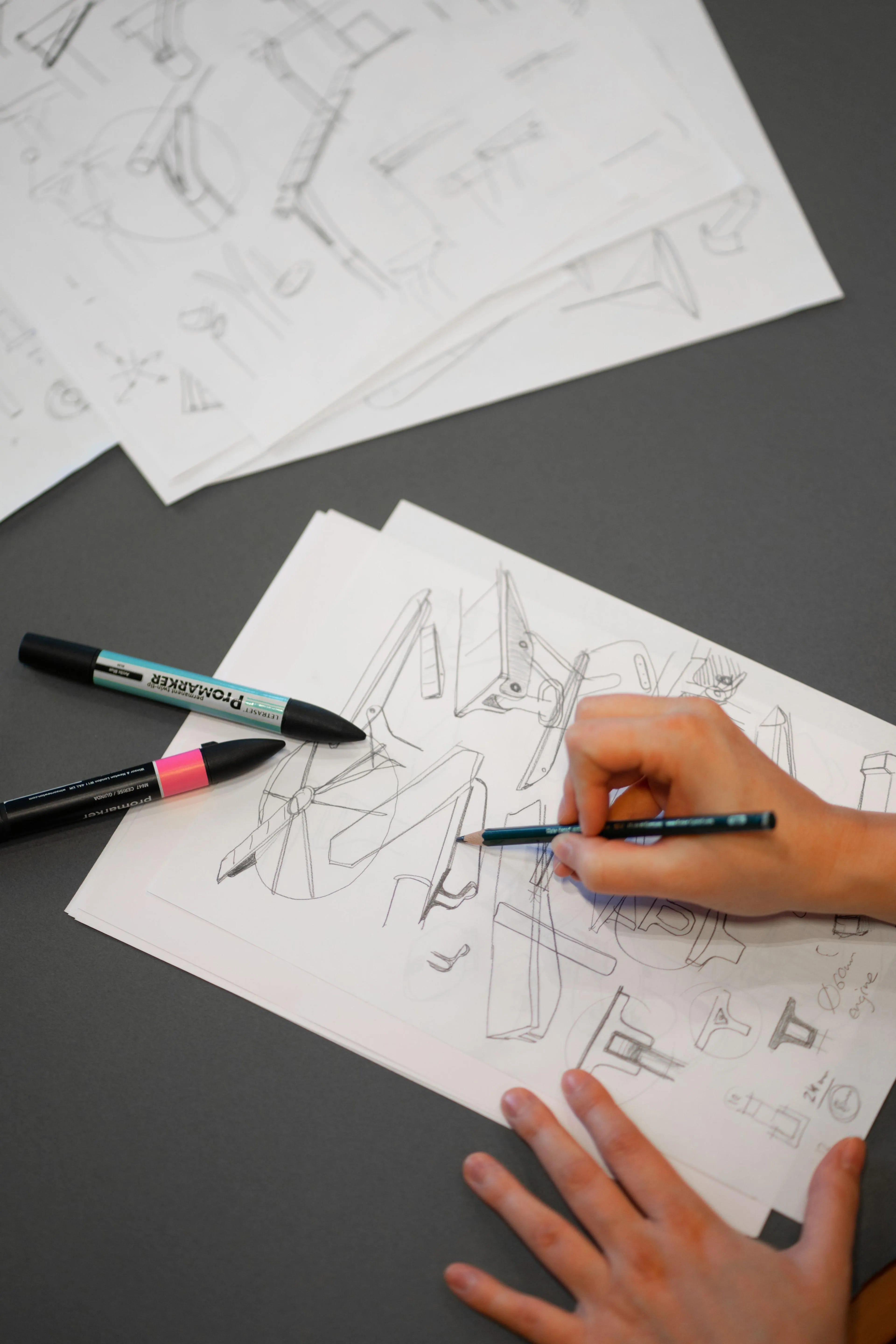
For a long time, working with an OEM was relatively straightforward. You had a physical product, clear specifications, a manufacturer who could execute. The rules were known. So were the roles.
New product categories changed those rules. An AI wearable, a connected device, a smart medical instrument: these aren't products with interchangeable components you order and assemble. They're systems where hardware, software, experience, and architecture are interdependent from the very first decision. And that's where it gets complicated. Every choice triggers another. It's not an assembly line. It's a living system where every variable is connected to the others. Defining that system before going into manufacturing, making sure industrial constraints, design choices, and technical requirements align before molds are made and compromises are set in stone, is exactly the work an OEM doesn't do.
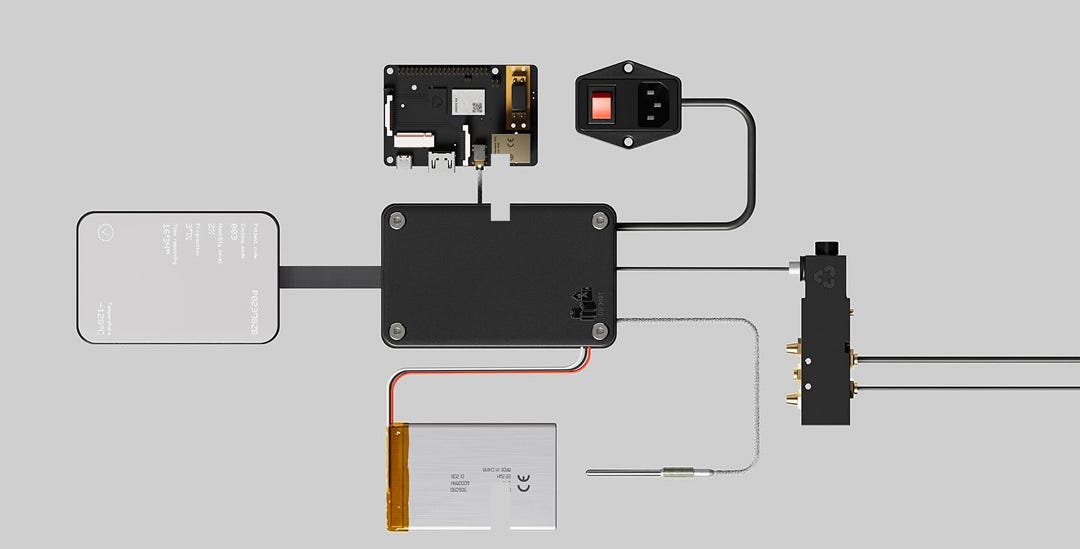
Translating, in this context, means converting. Taking an intent, often vague, never complete, and making it legible for someone who doesn’t speak the same language. The work isn’t to simplify. It’s to lose nothing in the passage from one world to the other.
What we do isn’t subcontracting, and it isn’t consulting. It’s taking ownership of the riskiest moment in product development: when everything is still open, decisions carry the most weight, and nobody in the organization has all the answers yet.
Concretely: defining the system architecture before choices get locked in .
Component selection and packing (choosing the right electronic components and optimizing how they fit within the available space)
DFA (Design for Assembly = designing the product so it can be assembled efficiently and without error at production scale)
DFM (Design for Manufacturing = adapting the design to match the actual capabilities and constraints of the manufacturing process)
EMC (Electromagnetic Compatibility = ensuring the device neither emits interference nor is affected by it, a mandatory certification requirement in most markets)
PCB design (laying out the printed circuit board that connects and powers all electronic components of the product)
Prototyping to validate, not to impress.
Killing what doesn't hold early, before it gets expensive.
Delivering documentation any OEM or ODM can read without interpretation.
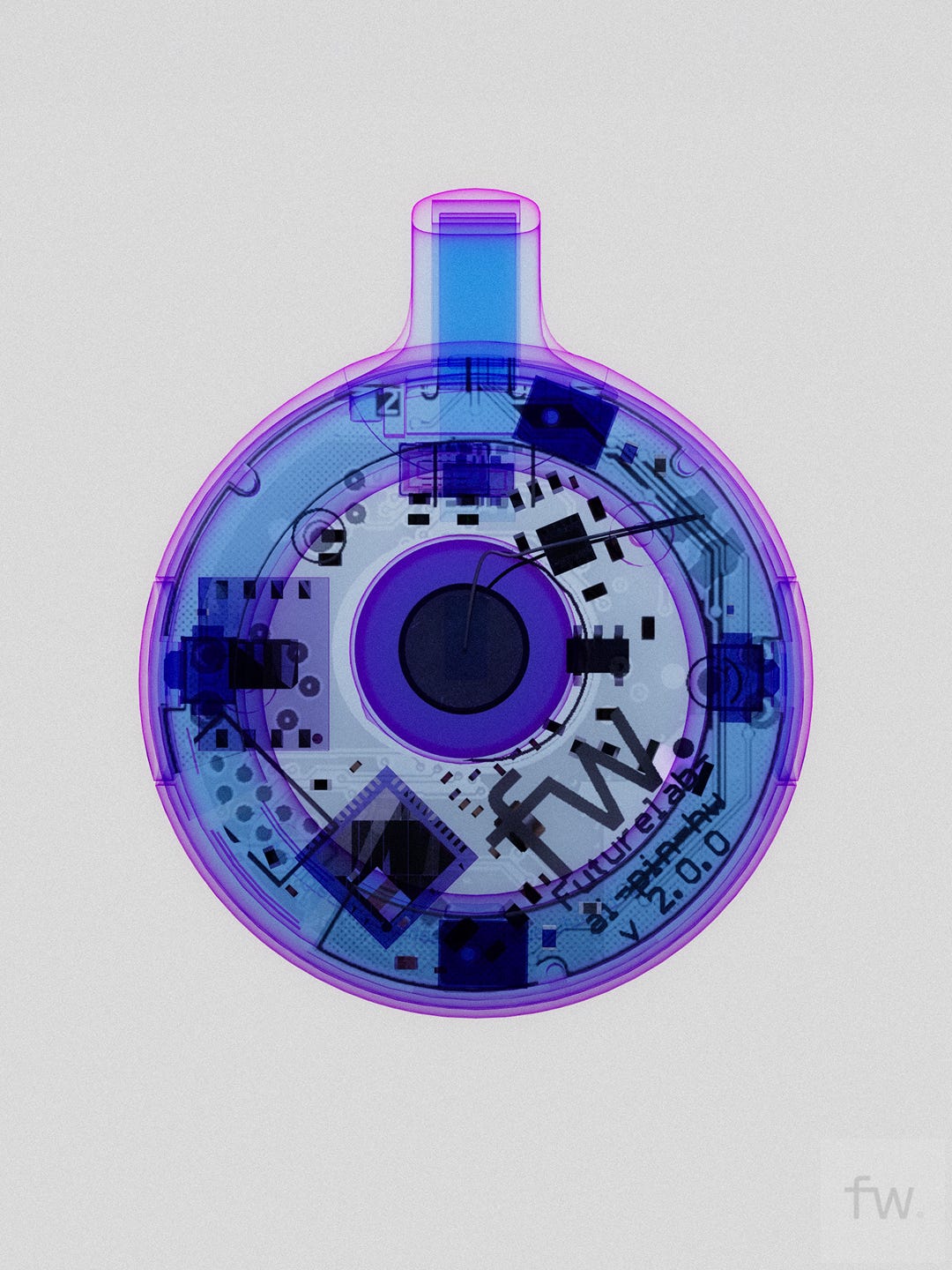
Design and engineering move together from day one, not in sequence. Decisions about form have consequences on architecture. Constraints on architecture have consequences on form. Separating the two is precisely what produces the compromises everyone regrets at the end of the process.
What we bring is a structured process that runs design and engineering in parallel. We explore where a technology creates real product and human value. We help you define what the product should be, and what it shouldn’t, aligning product vision, system architecture, desirability and feasibility. We design form, interaction, electronics, and software together, using design to test assumptions rather than decorate ideas. We build functional prototypes to validate product decisions in real conditions: technology integration, user interaction, materials, key manufacturing constraints. We prepare products for manufacturing without becoming a manufacturer. This phase ensures partner-ready documentation, manufacturing readiness, and a smooth handover to trusted industrial partners. We define manufacturing principles, assemblies, tolerances, electronics architecture, and supplier pathways so that any OEM or ODM partner can take over without friction.
Solid pre-industrial documentation, validated prototypes, a clear path to production.
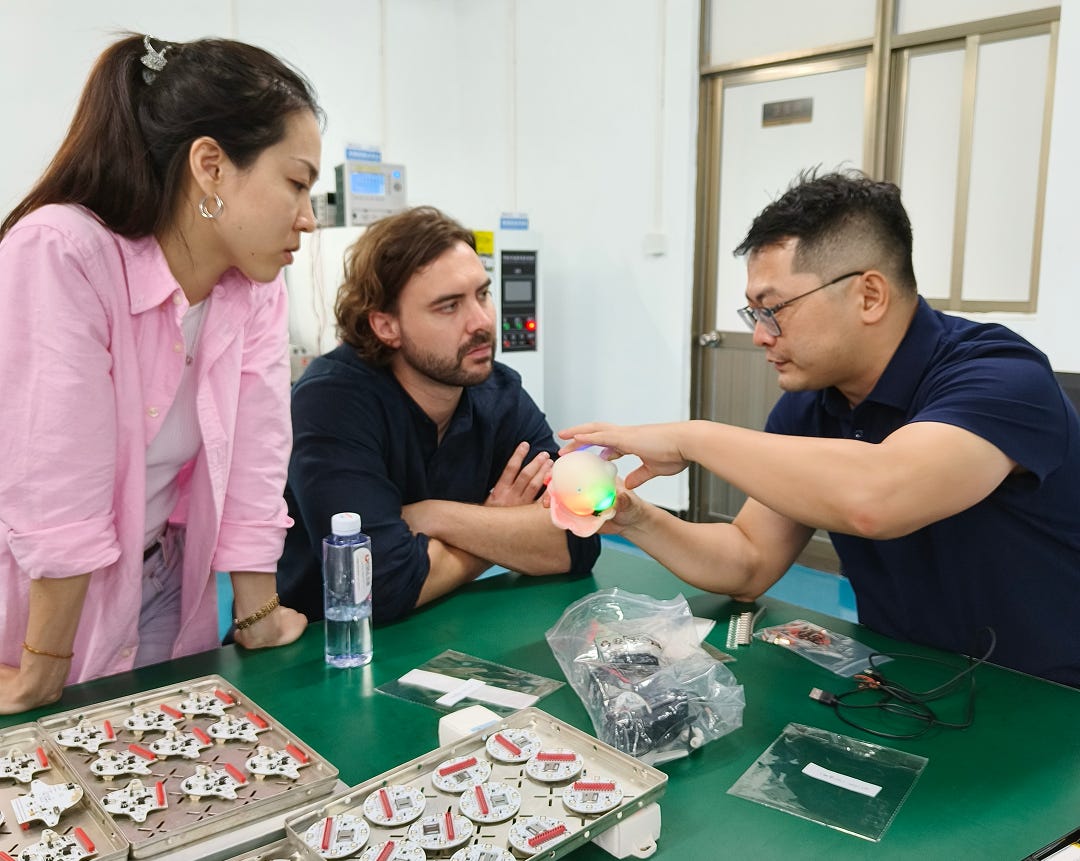
There's one last thing OEMs don't do, and that nobody does for you if you don't anticipate it :
A manufacturer can reproduce a form at scale.
It can't create the reason someone will want that product in their life.
That reason lives in decisions that seem secondary: the way the object sits in the hand, the signal it sends before it's even switched on, the apparent simplicity of an interaction that took months of work to disappear.
Desirability isn't added value. It's a prerequisite.
A product that doesn't earn its place doesn't survive.