We went to the Nike X Dropcity installation during Milan Design week 2026
The Swoosh took over five tunnels in Milan but one really stood out to us.

What Nike's last room taught us about designing without permission.
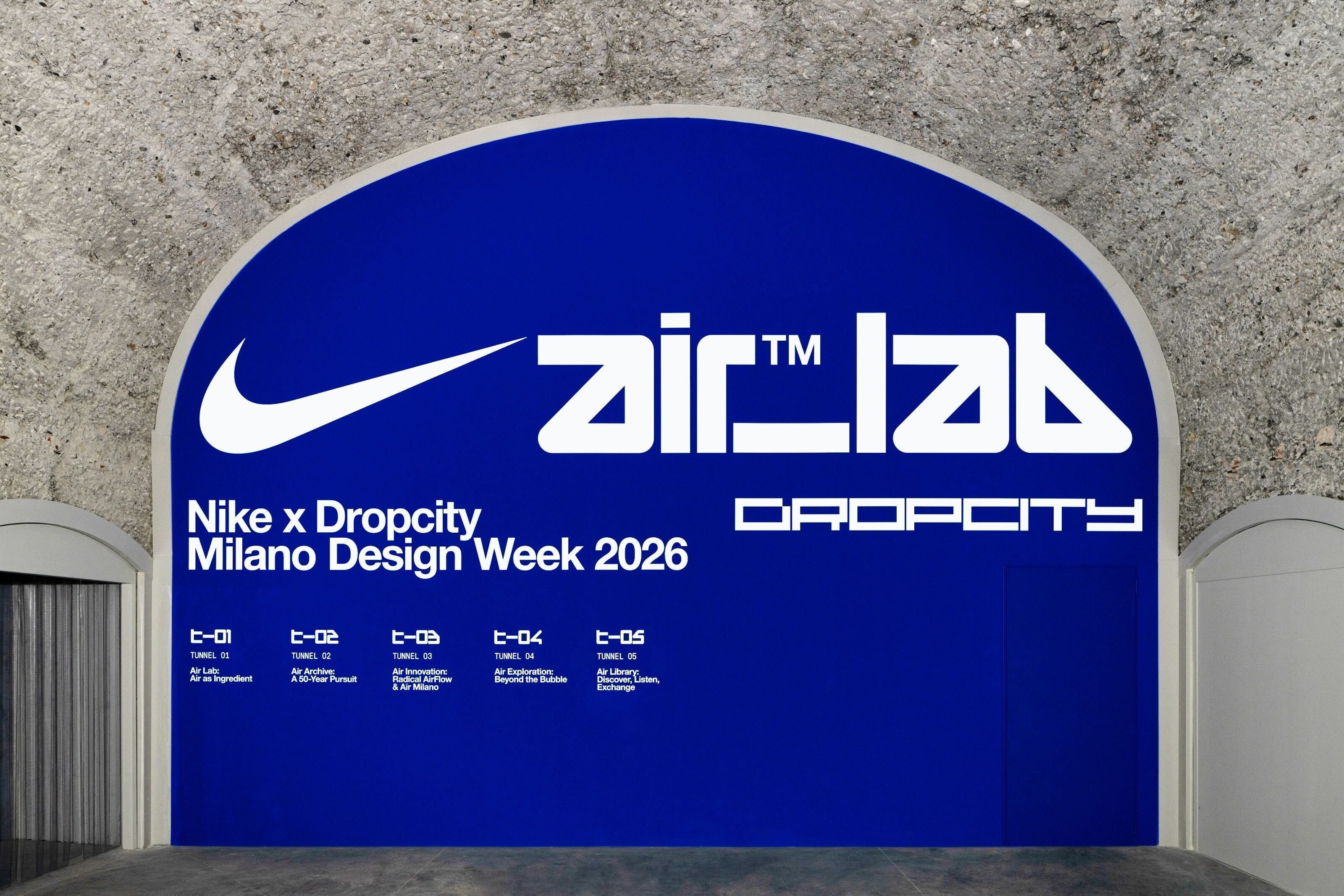
We spent a lot of Milan Design Week walking through installations that wanted to impress us. NikeAir_Lab at Dropcity was one of the few that wanted to show us how it thinks.
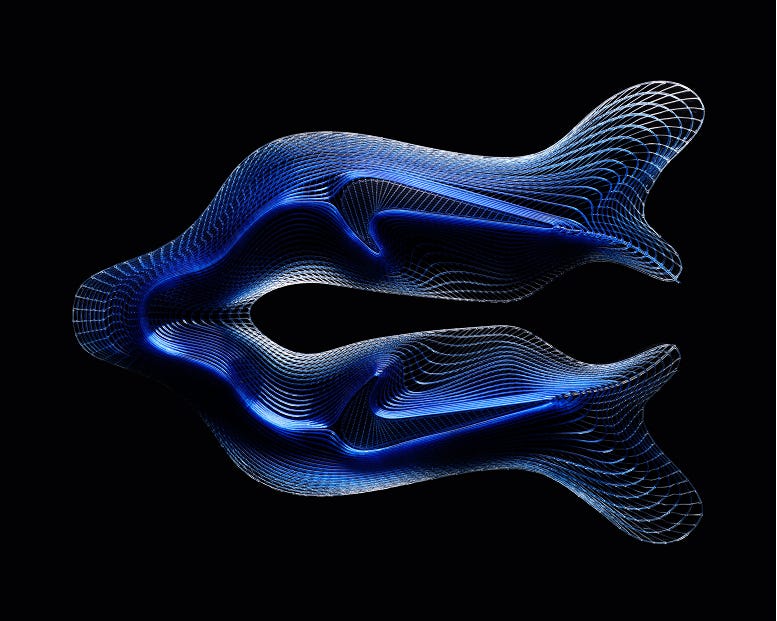
The lab took over five disused railway tunnels behind Milano Centrale, Nike's first real return to Design Week in years, built in partnership with Dropcity, the architecture and design center founded by Andrea Caputo. The whole thing was framed around a single, almost philosophical question: how do you make the invisible visible? Air, after all, has been Nike's signature material for nearly 50 years, and yet it's the one ingredient you can't actually see.
Most of the tunnels were exactly what you'd expect from a brand of Nike's caliber: beautifully staged scenography, polished visuals, and a deep archive tracing Air technology through the decades. You moved past Frank Rudy's original experiments, then Faith Kipyegon's Breaking4 speed suit displayed like a relic, then the Alphafly's early explorations laid out as specimens under glass. Each space built on the last, walking you through the evolution of an idea with the kind of reverence brand retrospectives usually reserve for their own mythology.
But the last room broke the spell.


The room where nothing had to work.
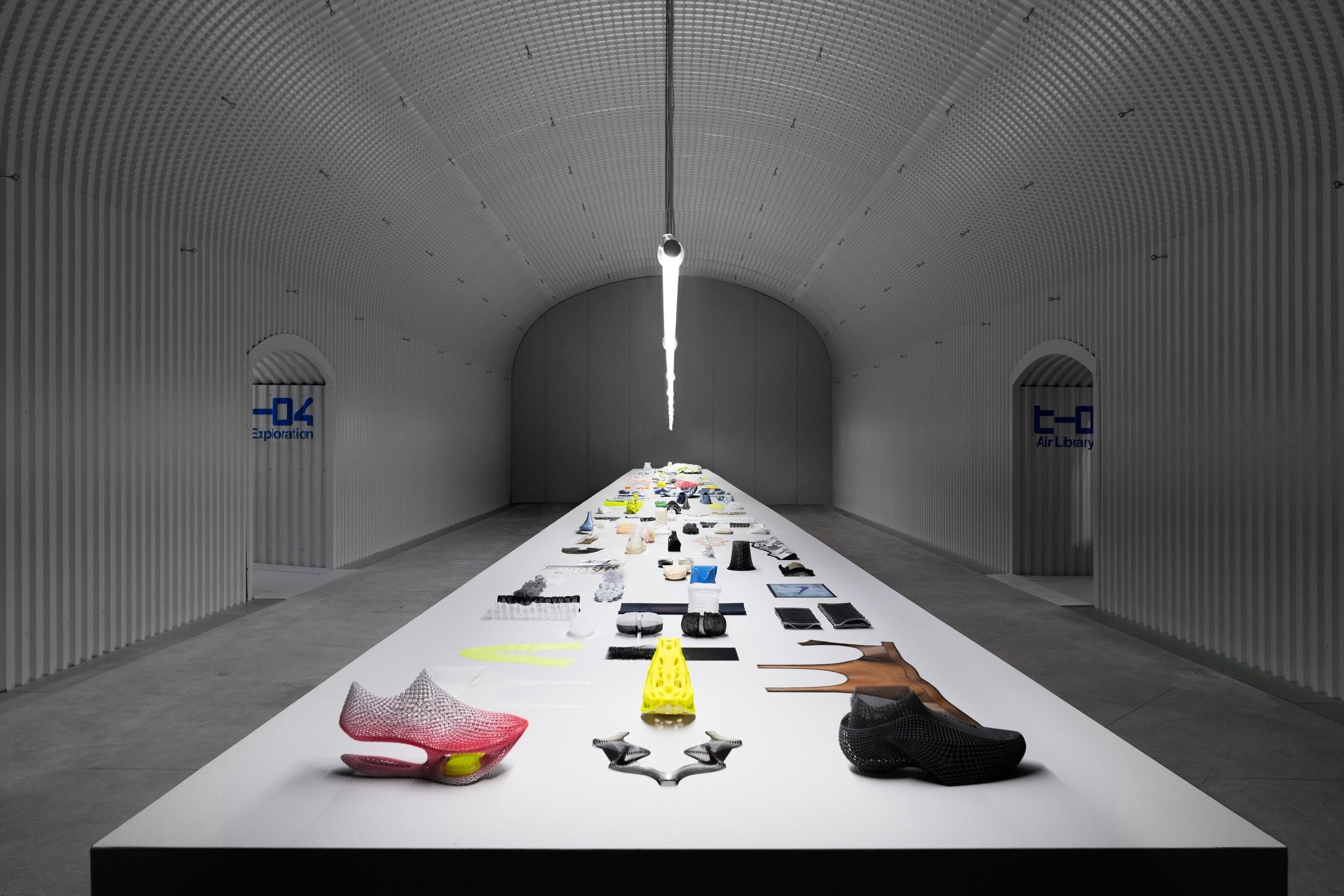
The final space was filled with 3D-printed shoe prototypes that, frankly, had no business being on a foot.
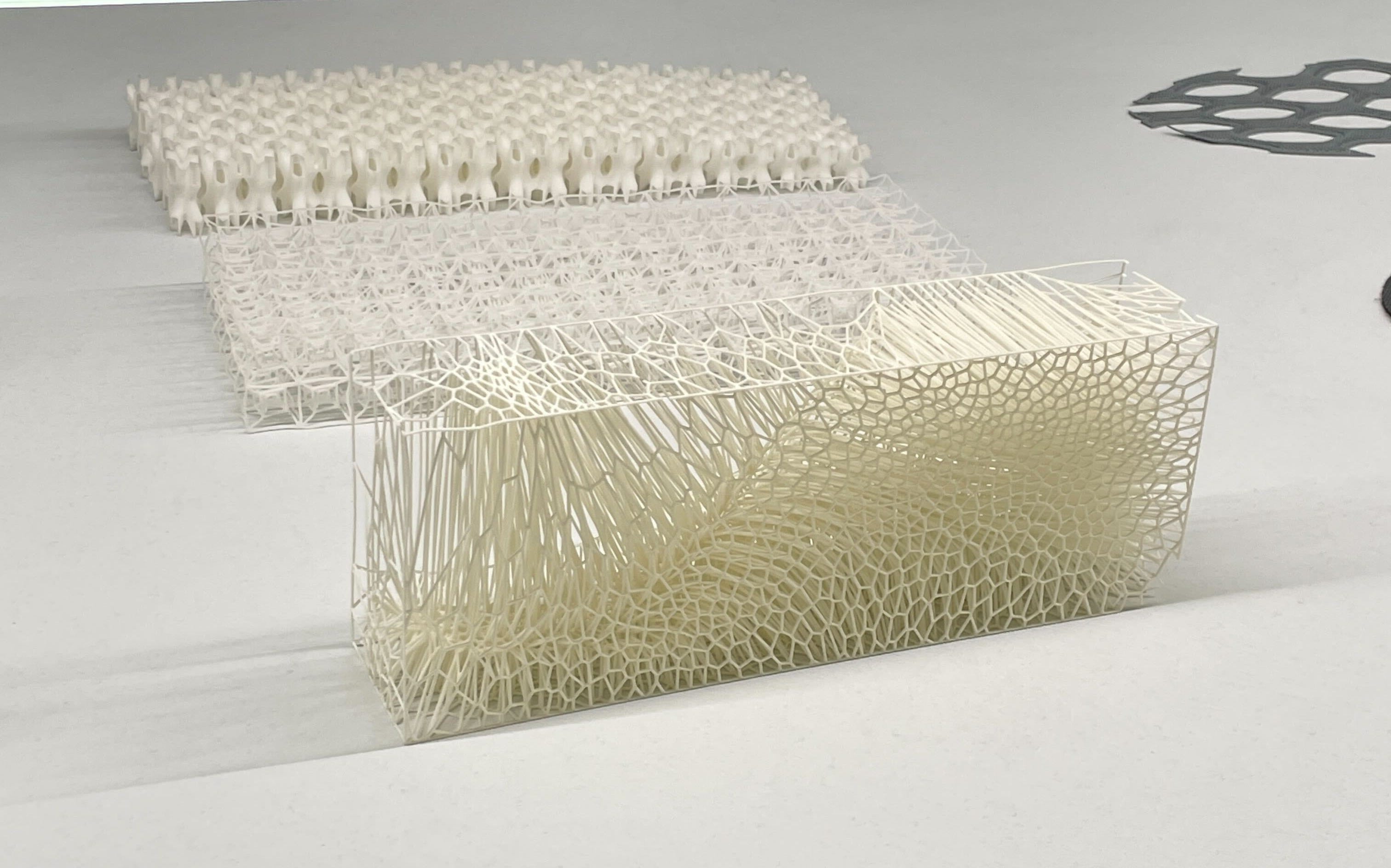
Wild textures. Lattices that looked grown rather than made.
Materials that seemed to argue with each other.
Shapes that ignored the basic contract a shoe is supposed to honor with the human body, while still being recognizable as a port of a shoe. None of them were products. None of them were trying to be products. That was the point.
What Nike was showing, quietly, without much signage, was the part of the design process that almost never gets exhibited: the unrestricted research phase. The phase where feasibility is deliberately switched off so the team can find out what's actually possible before reality starts negotiating things down.
You could trace lineages if you looked carefully. A texture from one impossible prototype echoed faintly in a midsole concept two tunnels back. A lattice geometry that couldn't survive a single run had clearly informed the structural language of something that could. The room wasn't a dead end, it was the upstream source of everything downstream.


Why this matters for designer, even in tech.
In tech and in product design in general, we talk a lot about prototyping.
But most of our prototyping happens inside a feasibility cage we never quite unlock.
What Nike was demonstrating is a different mode entirely. Call it generative research, speculative prototyping, whatever, the practice of deliberately producing artifacts you know won't survive, because the surviving ideas need a much wider gene pool than constrained ideation can produce.
A few things struck us about how they do this:
They make the unfeasible physical. Not sketches, not renders, actual printed objects you could pick up.
There's something about committing an idea to matter that exposes properties you'd never notice on screen.
We do too much of our wild thinking on paper or on slides and not enough in the real world.
They produce volume, not precious one-offs. The room was full. Dozens of variants on a theme, not three carefully art-directed hero pieces. Range matters more than polish at this stage, because you're trying to map a possibility space, not pick a winner. The funnel is explicit. You could see the full pipeline in the building: wild research at one end, refined product at the other, with visible connective tissue. Nothing was hidden. They were openly showing that most of what they explore doesn't ship, and treating that as a strength, not an embarrassment.
Failure is exhibited, not buried. Martin Lotti, Nike's Chief Design Officer, described the lab as showing "four steps forward and three steps back." Most companies edit those three steps out of their public narrative. Nike put them in a tunnel and turned the lights on.
The discipline of coming back.
The part that's easy to miss, and the part we think really separates this from indulgent speculative design, is the return trip. Wide, restriction-free research is only valuable if you have the discipline to circle back and pull what's useful into something feasible. Otherwise it's just art. Nike clearly does both. The unrestricted prototypes weren't on display as objects of admiration; they were on display as evidence of a process that terminates in real shoes people actually wear. The constraint isn't absent from their practice, it's just deferred. It enters the conversation later, after the possibility space has been explored, instead of before.
That's the move we’re the most inspired by.
In our work, constraints tend to enter on day one and never leave. Engineering capacity, platform limitations, timeline, scope, they're load-bearing from the very first sketch. The result is that our solutions tend to live in a narrow band around the obvious. We optimize early and explore late, when it should probably be the other way around.
What are we taking back to the studio ?
A few things we want to try, concretely:
Run a research phase where feasibility is explicitly off the table, not "let's brainstorm crazy ideas" energy, but a real, phase where the deliverable is a set of artifacts we know we can't ship. Make them anyway. Make them physical or interactive enough that you can actually evaluate them.
Build a feasibility funnel as a visible artifact, not a hidden process. Show the wild stuff next to the shipped stuff. Let teammates and stakeholders see the relationship.
It changes how people think about what design is for.
Stop treating discarded ideas as waste. The Nike tunnels made it obvious that the prototypes that didn't make it weren't failures, they were the substrate the successful ideas grew out of. We should keep our discards. Catalog them. Revisit them. Most of all: design longer before designing tighter. The last room at Dropcity was a quiet argument that the best constrained work comes from people who first gave themselves permission to be wildly unconstrained. That's a permission we don't grant ourselves nearly often enough in tech.
We left the tunnels thinking about all the projects we've shipped that were probably a local maximum, fine, defensible, plausible, because the search space was too small from the start. Nike's last room was, in the end, a room about search space. About how big it should be, how willing you should be to fill it with things that fail, and how much better the surviving ideas are when they had a real population to emerge from.
That's the souvenir we are bringing back from Milan.
Written by Hugo Simon
Thanks for reading !